They arrive for the Mara. They leave having seen elephants, a lion at dusk, the flat-topped acacia silhouetted against a burning sky. And that is extraordinary — it truly is.
But Kenya keeps secrets. Whole worlds tucked into altitude and shadow. Places where the light comes through in columns, where a colobus monkey moves through the canopy like smoke, where a river you have never heard of is quietly feeding a landscape you already love.
These are Forests in Kenya.
Covering nearly 7% of the country’s land surface and home to ecosystems found nowhere else on earth, Kenya’s forests are among Africa’s most underappreciated treasures. Some are older than recorded memory. Some are the reason the Maasai Mara’s rivers run at all.
Here are eight that deserve far more than a footnote.
1. Mau Forest Complex — The Heartbeat Beneath the Mara
Rift Valley
If you have ever watched the Mara River surge during the wildebeest crossing — if you have held your breath as the crocodiles turn in the current — you were witnessing the Mau Forest from a distance.
The Mau Forest Complex is the largest indigenous montane forest in East Africa, sprawling across more than 400,000 hectares of the Rift Valley escarpment. It is the water tower that keeps the Mara flowing. Without it, the great migration as we know it simply would not happen.
Deep within the Mau lives the mountain bongo, one of Africa’s most elusive antelopes. Flame-coloured, spiral-horned, glimpsed by almost no one. Around it, a forest so dense that sunlight arrives in fragments, falling like something misplaced.
Decades of encroachment brought the Mau to a critical tipping point. Reforestation campaigns and tightened protections have begun to turn the tide — but the work is ongoing, the need urgent. To visit the Maasai Mara is, in a very real sense, to owe something to this forest.
2. Kakamega Forest — Kenya’s Last Tropical Rainforest
Western Kenya
Travel far enough west and Kenya changes completely. The savanna gives way to something older and denser — a forest that once covered the entire equatorial belt of Africa, from the Atlantic coast all the way to the Rift.
Kakamega is all that remains of it in Kenya, and it is astonishing.
More than 380 plant species grow here. Over 400 bird species have been recorded, many of them Central African species at the extreme eastern edge of their range — birds you will find nowhere else in the country. The rare De Brazza’s monkey watches from the trees with the expression of someone who has seen everything and is still deciding what to make of you.
Guided walks, primate tracking, and early morning birding sessions offer a completely different rhythm from the open-plains safari. Quiet. Patient. Revelatory.
3. Aberdare Forest — Where Elephants Walk in the Mist
Central Kenya
There is a particular kind of silence that belongs to high-altitude forests. Cool, close, and watchful. The Aberdare Forest carries it well.
Rising through bamboo and into montane rainforest along the Aberdare Range, this is a landscape of vertical drama. Elephants here are not the plains animals you photograph from a vehicle — they are mountain creatures, adapted to altitude and shadow, moving through the bamboo with a quietness that seems impossible for something so large.
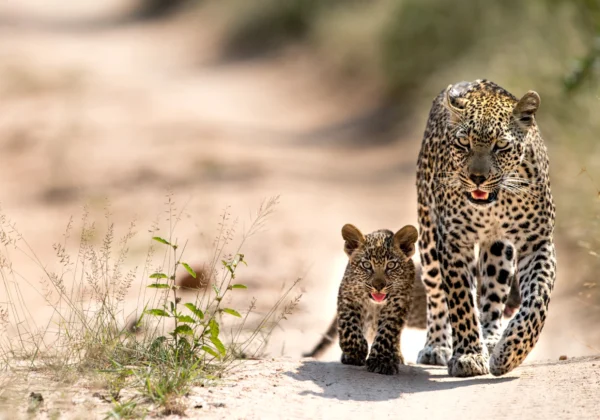
Leopards den in the rocky outcrops. Rare endemic birds call from the canopy. Below it all, rivers form that will eventually reach Nairobi’s taps — a fact that makes the forest’s continued protection feel both ecological and quietly political.
4. Mount Kenya Forest — A UNESCO World at Your Feet
Central Kenya
Mount Kenya, Africa’s second-highest peak, wears its forests like a collar — dense and many-layered, circling the mountain from the lower zones to the point where trees give way to moorland and then rock and ice.
Over 130 bird species inhabit this forest. Buffalo move through it in the early mornings. Elephants use ancient paths between the highland zones and the lower valleys, corridors that have likely existed for thousands of years.
The whole complex — mountain and forest together — is a UNESCO World Heritage Site. That designation matters, but what it cannot capture is the quality of the light on these slopes at altitude, the way the forest smells after rain, or the strange intimacy of standing on the equator in cold mountain air.
5. Arabuko-Sokoke — The Secret Giant of the Coast
Coastal Kenya
Most people drive past Arabuko-Sokoke on the way to Malindi without knowing what it is: the largest coastal forest remaining in East Africa.
Three globally threatened bird species live here and almost nowhere else on the planet — the Sokoke Scops Owl, Clarke’s Weaver, and the Amani Sunbird. The golden-rumped elephant shrew, one of Africa’s most charming and peculiar small mammals, scurries through the leaf litter. Rare reptiles. Rare butterflies. Rare everything.
Conservation here is deeply community-rooted. Local families manage forest resources, guide visitors, and directly benefit from the forest’s protection. It is one of the most honest models of conservation on the continent — and a reminder that forests survive longest when the people living beside them have reason to love them.
6. Ngare Ndare Forest — Hidden Trails, Ancient Elephants
Central Kenya
Few travellers know Ngare Ndare. Fewer still know that it sits inside a wildlife conservancy where elephants still move freely through the trees, following migration routes that have existed long before any map was drawn.
The hiking trails here are some of the most rewarding in the country — canopy walkways suspended above the forest floor, paths that wind to viewpoints where Mount Kenya fills the entire sky. Black and white colobus monkeys hang from the high branches like pieces of a fur coat left out to dry.
It is unhurried. Uncrowded. The kind of place that makes you want to stay longer than you planned.
7. Karura Forest — The Green Miracle Inside Nairobi
Nairobi
No list of Kenya’s forests is complete without Karura — a thousand acres of indigenous forest sitting, improbably, inside the boundaries of one of Africa’s fastest-growing cities.
In the 1990s, Karura was under threat from illegal allocation and encroachment. The late Professor Wangari Maathai and her supporters were beaten by hired thugs for attempting to plant trees here. Today, those trees stand. Karura Forest stands.
People jog its trails before work. Families picnic beside its waterfall on Sundays. Birders tick species on weekday mornings. It is a place that carries the weight of its own survival in every root — and all the more beautiful for it.
8. Ngong Forest — Nairobi’s Quiet Sanctuary
Nairobi
Smaller than Karura, less dramatic than the highlands, but no less important — Ngong Forest is the city’s quiet green lung, a remnant of the landscape that once covered the hills above the Rift Valley.
Indigenous trees shade its paths. Sunbirds flicker through the undergrowth. On a clear morning, you can sometimes catch a view of the Ngong Hills beyond the canopy — a reminder that even in a city of millions, the wilderness is never entirely far away.
What All of This Has to Do With a Safari Camp in the Maasai Mara
We are, at heart, a camp that lives in relationship with the land. Every conversation we have about conservation begins close to home — with the Mara ecosystem, the rivers, the grasslands, the skies.
But Kenya is a country where conservation is never local for long. The Mau Forest feeds the river outside our camp. Kakamega holds species whose ancestors once ranged this far. Arabuko-Sokoke proves that communities can be the best conservationists when given the chance.
When you visit Enkakenya Mara Camp, you are stepping into something larger than a safari itinerary. You are part of a country that is, slowly and seriously, learning to hold onto what it has.
Plan a Stay in the Maasai Mara
Ready to experience the wild heart of Kenya for yourself?
Whether you have questions about the best time to visit, what to pack, or how to combine the Mara with other Kenyan destinations, we are here to help — and happy to chat over WhatsApp.
Or make a direct enquiry here and our team will be in touch within 24 hours.
Enkakenya Mara Camp sits in the greater Maasai Mara ecosystem — one of the most biodiverse wildlife regions on the African continent. Guests enjoy exclusive access to conservancy land, knowledgeable Maasai guides, and a landscape that changes with every hour of light.